The 36-Hour Day
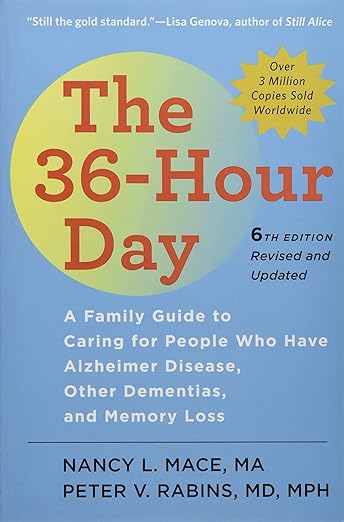
Fight Dementia! The 36-Hour Day : A Family Guide to Caring for People Who Have Alzheimer Disease, Other Dementias, and Memory Loss
Through seven editions, The 36-Hour Day has been an essential resource for families who love and care for people with Alzheimer disease. Whether a person has Alzheimer disease or another form of dementia, he or she will face a host of problems. The 36-Hour Day will help family members and caregivers address these challenges and simultaneously cope with their own emotions and needs.
Featuring useful takeaway messages and informed by recent research into the causes of and the search for therapies to prevent or cure dementia, this edition includes new information on
• devices to make life simpler and safer for people who have dementia
• strategies for delaying behavioral and neuropsychiatric symptoms
• changes in Medicare and other health care insurance laws
• palliative care, hospice care, durable power of attorney, and guardianship
• dementia du...e to traumatic brain injury
• choosing a residential care facility
• support groups for caregivers, friends, and family members
The central idea underlying the book―that much can be done to improve the lives of people with dementia and of those caring for them―remains the same. The 36-Hour Day is the definitive dementia care guide.
MoreLess
Through seven editions, The 36-Hour Day has been an essential resource for families who love and care for people with Alzheimer disease. Whether a person has Alzheimer disease or another form of dementia, he or she will face a host of problems. The 36-Hour Day will help family members and caregivers address these challenges and simultaneously cope with their own emotions and needs.
Featuring useful takeaway messages and informed by recent research into the causes of and the search for therapies to prevent or cure dementia, this edition includes new information on
• devices to make life simpler and safer for people who have dementia
• strategies for delaying behavioral and neuropsychiatric symptoms
• changes in Medicare and other health care insurance laws
• palliative care, hospice care, durable power of attorney, and guardianship
• dementia du...e to traumatic brain injury
• choosing a residential care facility
• support groups for caregivers, friends, and family members
The central idea underlying the book―that much can be done to improve the lives of people with dementia and of those caring for them―remains the same. The 36-Hour Day is the definitive dementia care guide.
MoreLess


10
Tokens

Guest 3 days ago
It seems to me, and to a friend with Alzheimer's, that the term DEMENTIA should NOT BE USED, PERIOD. Why not "memory challenged" or another term that isn't so stigmatized? It also reminds her of the word DEMON.
Guest 9 days ago
A useful and well put together guide about the complex world of Alzheimer dementia and how to care for people who are suffering from it.
Guest 9 days ago
I had heard that The 36-Hour Day is the Alzheimer's caregivers bible, and I can see why. Having read other books on the subject, I'd say The 36-Hour Day is a more complete reference guide, helpful in many different stages of caregiving. Chapter titles are Dementia, Getting Medical Help for the Person with Dementia, Characteristic Behavioral Symptoms of Dementia, Problems in Independent Living, Problems Arising in Daily Care, Medical Problems, Behavioral Symptoms of Dementia, Symptoms That Appear as Changes in Mood, Special Arrangements If You Become Ill, Getting Outside Help, You and the Person with Dementia as Part of a Family, How Caring for a Person with Dementia Affects You, Caring for Yourself, For Children and Teenagers, Financial and Legal Issues, Nursing Homes and Other Living Arrangements, Brain Disorders and the Causes of Dementia, Research in Dementia. My copy is 306 pages.Because of my family's situation, the chapters that helped me most at this time were on daily care and medical issues. When these chapters described some issues my dad has, I was able to recognize the symptoms as being connected to the dementia. When these chapters gave suggestions for dealing with arguments and providing recreation, I was enlightened and given hope for more ways to make my dad's last days more enjoyable. The chapters on caregivers' emotions are supportive. I have trouble feeling guilty that I'm not doing more, so reminders that caregivers need respite cannot come too often.
I recommend buying this book and keeping it handy. Read it, but make a point to page through it at least once a month to see what info might refresh you in that moment.
Guest 9 days ago
I spent 18 years of my professional life as a social worker specializing in the problems of the aging. Thirteen of those years were in nursing homes and rehab facilities. I could always identify the families of residents with Alzheimer's: they had big black circles under their eyes from lack of sleep. The 36 Hour Day was and is still the best thing written for the loved ones and caregivers of dementia patients. This book will help you deal with the terrible burdens of anger, love, guilt and confusion that dementia imposes on its victims and those who love them. In this one volume you will find out what to expect and many ways of dealing with it. Personality changes, weird, unpredictable behaviors, outbursts of emotion, loss of simple skills and uncontrollable anxiety can make even your beloved Mom into a terrible burden to her caregivers. How do you cope when your darling Daddy turns into a befuddled stranger? What do you do when the state troopers find Auntie Elma on Highway 19 in her nightie? Who do you turn to for advice? Where do you get the best medical care? Can you keep Mom at home or does she need an institution? This book really does have some good answers and some hints on other questions you may need to answer. This book can save you a lot of stress, trust me, I KNOW THIS!
Guest 9 days ago
This is a remarkable resource. Seriously, I'm too exhausted from my 36-hour days of sole caregiving of my mother to go into all the things this book has taught me and all the ways it's helping me and anyway, it's comprehensive. Seems like The 36-Hour Day covers every conceivable situation, sometimes skimming the surface and sometimes taking a deeper dive, and always offers information, practical advice, resources, a supportive space between the pages. If it's not in the book, information on how and where to get that information is.It's been updated many times since Johns Hopkins first released it decades ago, and the e-book has updated twice as I've been reading it. There are recommendations of all sorts and specific info on which organizations can help with what. There are checklists of questions to ask of agencies that employ home health aides. Same for management and staff at facilities and day care programs, as well as things to look for there, look at on the sly and ask about. Ways to handle it all, broken down into bits because it can be so overwhelming. It's written with compassion and throughout an understanding of how difficult it is for the caregiver and the cared-for.
Each avenue I've pursued thanks to the book has led to others. My mother's symptoms change and so do situations, so I've reread sections of the book and gotten more from them at the right time for them. Parts that didn't register much on first reading are invaluable later. It's organized with that in mind, conveniently, with chapters that include subtopics and a thorough index.
There's guidance on ways to deal with specific behaviors and behavioral changes. There's support around how difficult it can be whether you're alone or with siblings or a partner. The book goes into how caring for one parent can create tension in a marriage or relationship and when there is disagreement among siblings among how things ought to be done.
Transitioning from home care to a facility is dealt with at length and in practical and supportive terms. There are suggestions for how to make it better for the patient, checklists of things to ask when choosing a facility -- including under what circumstances and by what method they restrain patients.
Many of these things are difficult to contemplate but far better to know as much information about everything as possible in the calm before a storm. There are legal matters and medico-legal matters to decide. So much.
The trajectory for every patient is different, the lifestyle before and after diagnosis as well and of course the situation of the caregiver(s) throughout the course of the illness. I can only say for me that it was a surprising and still sometimes is a frightening thing we're living with, a new abnormal, and there's nothing I can't find or find out about, which is a huge comfort. And there's support, so I don't need to lean on my friends continuously; many of them have done this already or are now, some of whom will, sadly, sometime do it for the love of their life.
Know what else is a comfort? There are so many people in the world who are so much worse off. When she's responding "shut up" to everything I say to or ask her, or when she's impetuously going out the door and I have to stop what I'm doing and go flying after her, that's not helpful. But times like now when she's settled down, and in the middle of the night when it's quiet as I lie awake, it's important to me to remember that and be grateful.
Write Review:
Guest
Read Also


8 / 10

User Reviews: